
01 / Disconnected systems
Healthcare software • AI • revenue cycle
Connect the systems. Automate the work. See the operation clearly.
We design custom healthcare applications, AI-assisted workflows, API integrations, reporting platforms, and revenue cycle solutions that replace spreadsheets, repeated data entry, and fragmented handoffs.
Synthetic demo
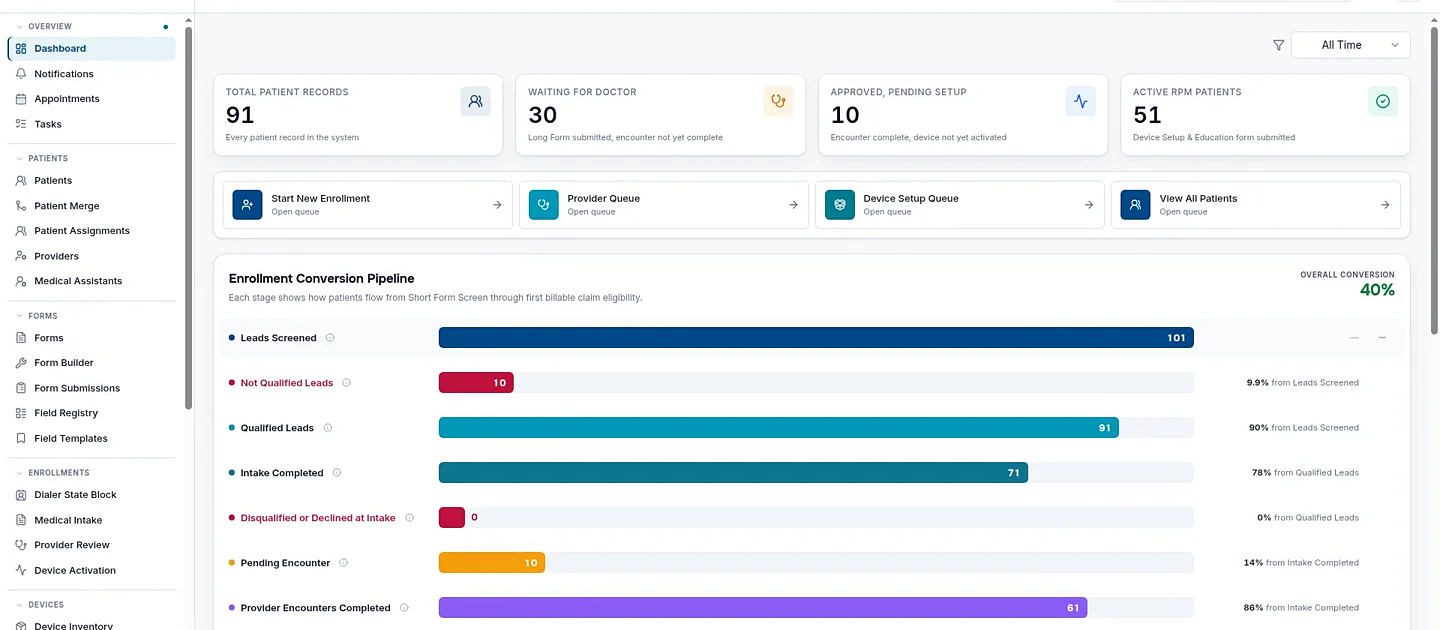
Purpose-built reporting, workflow, and revenue controls
Workflow-led
Requirements start with the real operating process
System-connected
APIs, data, staff, and handoffs designed together
Revenue-aware
Controls built around operational and billing risk
Built acrossCustom applicationsAI automationEHR and CRM integrationsRevenue cycle and billingOperations reportingSecure cloud
The technology is rarely the whole problem. The cost appears in the work that happens between systems, teams, evidence, and revenue.
02 / Manual operations
Staff repeat data entry, rebuild reports, and rely on memory to move work forward.
03 / Revenue and compliance risk
Missing evidence, weak validation, and invisible exceptions create delays and lost revenue.
Solution accelerators
Focused products for expensive healthcare workflow gaps
These research-backed concepts are available for discovery, audit-first engagements, and pilot builds. Each starts as a focused control layer rather than another system of record.
Focused pilot
01 / Revenue recovery
IDR RevenueGuard
Screen out-of-network underpayments, calculate No Surprises Act deadlines, organize evidence, and reconcile final dispute payments back to the original claim.
- 835 and claim screening
- Deadline and evidence control
- Payment recovery reconciliation
Audit + monitoring
02 / Hospital compliance
HPT MRF Guard
Reconcile hospital source data to the published price-transparency file and identify broken links, missing rates, identifier errors, and unexplained file changes.
- Public MRF scanner
- Source-to-publication reconciliation
- Attestation evidence
Pilot-ready
03 / Quality reporting
HOPE SubmitGuard
Preflight hospice assessment exports, explain iQIES errors, track corrections, and protect quality-reporting deadlines with a complete audit trail.
- Assessment preflight
- Error-resolution work queue
- Correction deadline control
Public-data pilot
04 / Provider data
NetworkTruth
Compare provider rosters, credentials, locations, specialties, accepted plans, NPPES, PECOS, and payer directory data to surface discrepancies before they block referrals.
- Provider and location matching
- Directory discrepancy queue
- Correction follow-up history
Validation pilot
05 / Quality payment
MIPS SubmissionGuard
Validate QRDA III and QPP JSON files, reconcile clinicians and measures, track replacements, and show payment risk before submission.
- QRDA and QPP preflight
- Source-to-measure checks
- Replacement version control
Audit-first
06 / Laboratory revenue
PAMA LabRate Guard
Reconcile private-payer rates, volumes, entities, and final payments into an audit-ready reporting workflow while showing future Medicare rate exposure.
- Rate and volume reconciliation
- Entity and NPI mapping
- Audit-ready reporting
Solution concepts are tailored during discovery. GSS does not provide legal determinations, CMS certification, or automated external submission without an approved method and human review.
What we do
Healthcare technology built around the operating reality
We map the workflow, identify the highest-value gap, and build the application, integration, automation, reporting layer, or revenue cycle control needed to fix it.
01
Custom healthcare applications
Build secure internal portals, work queues, review tools, operations centers, and web applications around the way your organization actually works.
- Internal portals
- Role-based work queues
- Operations control centers
02
AI and workflow automation
Reduce repetitive administrative work with AI-assisted review, business rules, approvals, notifications, and human-controlled automation.
- AI-assisted workflows
- Document review
- Approval and escalation logic
03
Systems integration and interoperability
Connect EHRs, CRMs, billing platforms, forms, vendor systems, and cloud services using APIs, webhooks, FHIR, HL7, SOAP, and middleware.
- API and field maps
- Middleware and webhooks
- Retries, logs, and recovery
04
Operations dashboards and reporting platforms
Replace generic BI reports with purpose-built applications that show workload, bottlenecks, revenue, exceptions, staffing, and operational performance.
- Custom reporting tools
- Operational dashboards
- Trusted metric definitions
05
Revenue cycle and billing solutions
Improve claims, denials, eligibility, accounts receivable, payment reconciliation, billing workflows, and financial visibility through RCM expertise and technology.
- RCM workflow review
- Claims and denial controls
- Billing reconciliation
06
Scripts, utilities, and data reconciliation
Build reliable utilities for file processing, API extraction, scheduled jobs, database updates, validation, report generation, and system-to-system reconciliation.
- Scheduled automation
- CSV and Excel processing
- Validation and audit logs
Selected product work
Operations software you can see
Healthcare applications usually sit behind private logins. These demonstrations use synthetic data to show how we design reporting, work queues, integrations, approvals, and audit controls without exposing client or patient information.
Featured product pattern
Healthcare Operations Control Center
Custom reporting, work queues, integrations, and billing controls in one operating view
A role-based internal application that brings workflow status, exceptions, staff ownership, operational reporting, billing readiness, and integration monitoring into one place.
- Purpose-built operational reporting
- Role-based queues and approval steps
- Integration, audit, and billing controls
Play demo · 0:26
Synthetic demo
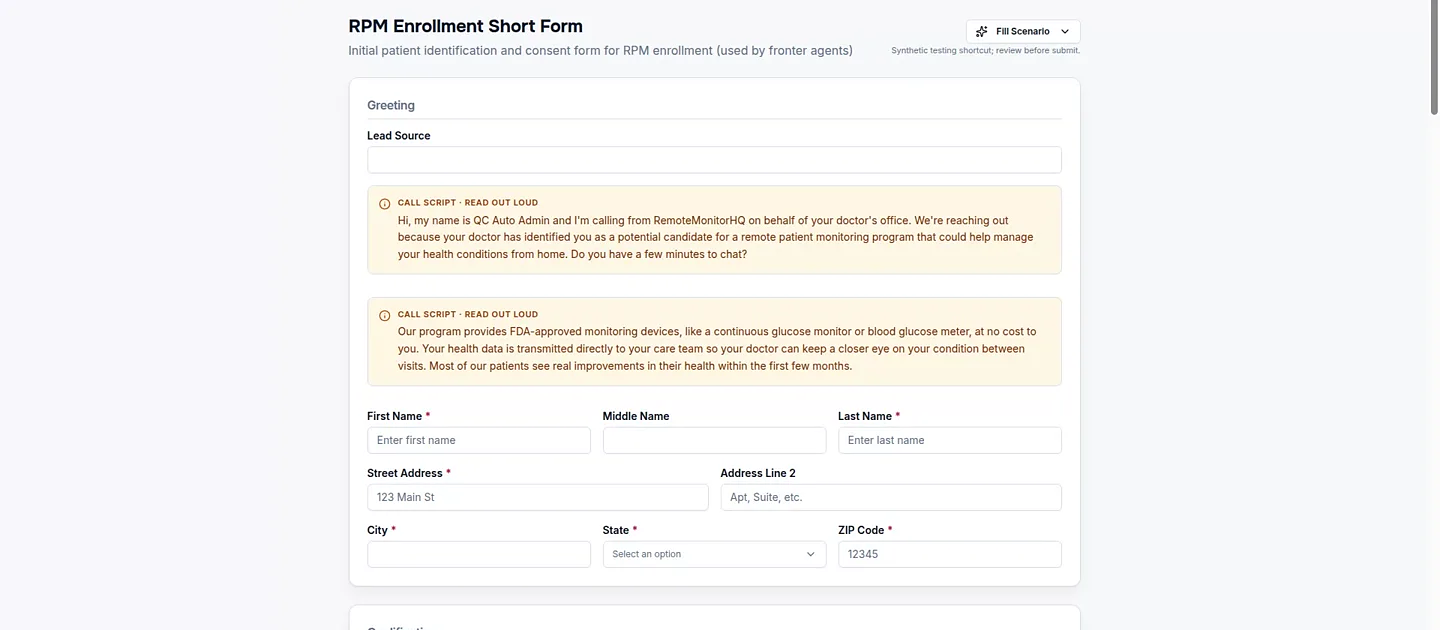
Synthetic demo
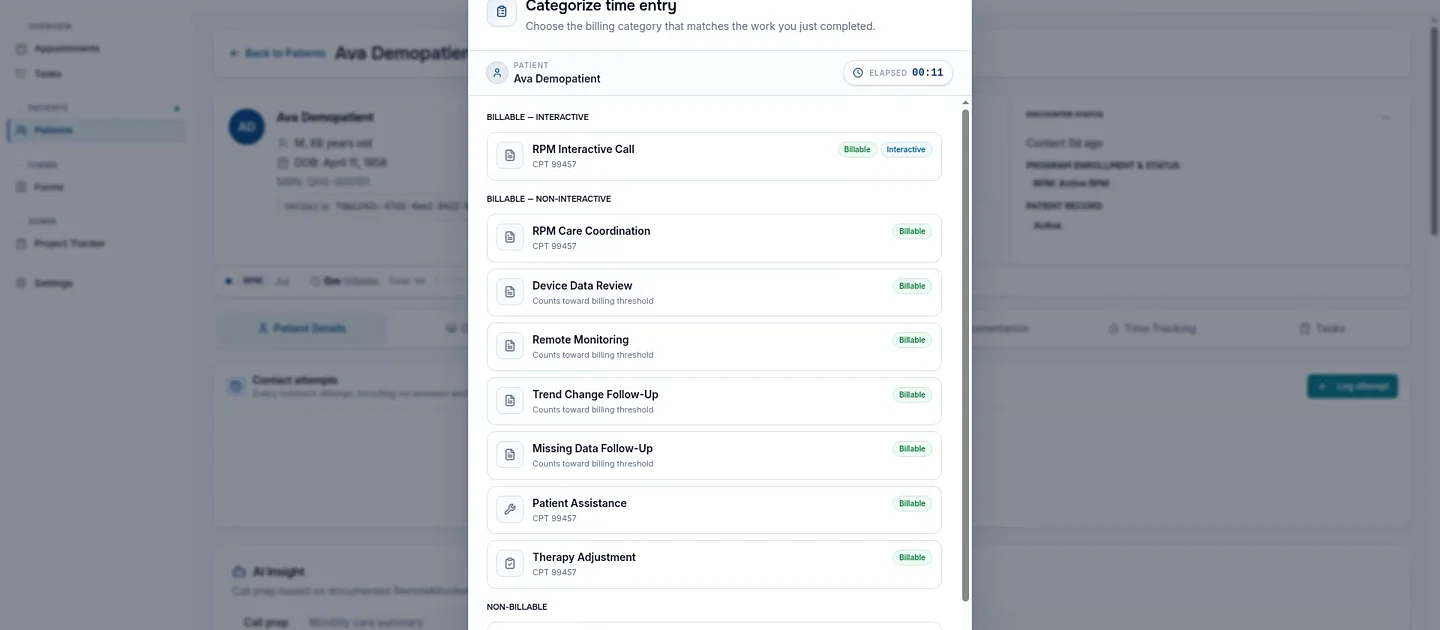
Synthetic demo
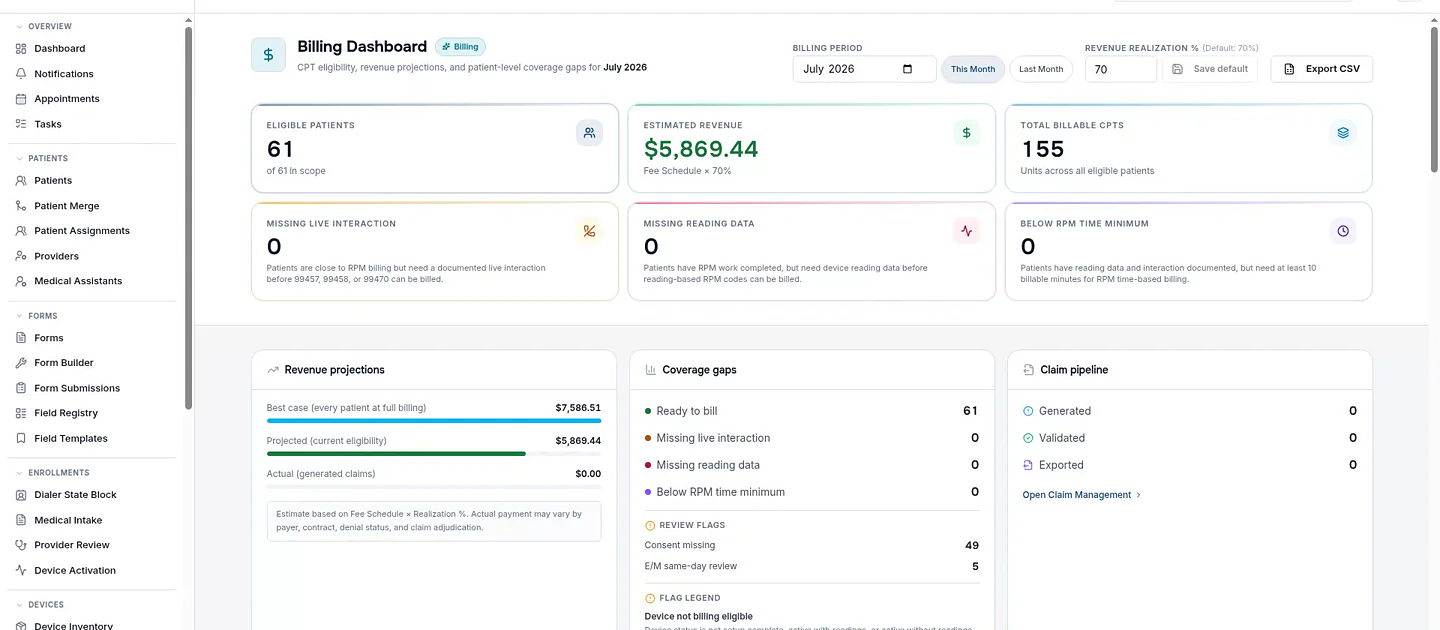
Synthetic demonstration data. No PHI or client-confidential information.
01
Workflow and ownership
Role-based queues, clear next steps, approvals, escalations, and visible handoffs between teams.
02
Operational reporting
Purpose-built reporting for workload, aging, capacity, exceptions, conversion, and performance.
03
Revenue and integration controls
Validation gates, audit history, sync monitoring, safe retries, billing readiness, and reconciliation.
How we work
Clear ownership from workflow to production proof.
Discovery, product decisions, architecture, build oversight, testing, and rollout stay connected so the final system matches the real operational need.
- 01
Map the workflow
Document the current process, systems, owners, handoffs, rules, and failure points.
- 02
Design the control layer
Define the future workflow, data model, automation, interfaces, and approval gates.
- 03
Build and connect
Develop the application, integration, script, or reporting platform and connect the real systems.
- 04
Test and operationalize
Test success and failure paths, document ownership, prepare rollout, and measure production results.
Why GSS
Healthcare operations, product strategy, engineering, and RCM in one delivery model
Healthcare workflow and RCM knowledge
Product and architecture ownership
Hands-on API, SQL, AI, and application work
Clear testing, documentation, and rollout support
GSS Healthcare Solutions helps healthcare organizations solve operational problems that sit between staff workflows, software systems, data, and revenue cycle performance.
Greg Sanon leads discovery, product strategy, solution architecture, integrations, reporting, testing, and delivery. Dedicated RCM and technical specialists support billing operations, development, data, and quality assurance when the engagement requires them.
Every project has one accountable lead, clear requirements, testable acceptance criteria, documented handoffs, and a solution designed around the real operating environment rather than a generic template.
Systems and standards
- athenahealth
- eClinicalWorks
- Salesforce
- JotForm
- PostgreSQL
- SQL Server
- Microsoft Azure
- REST APIs
- FHIR
- HL7
- SOAP
- OpenAI
- Next.js
- Python
- TypeScript
- Webhooks
Start with one workflow
What is slowing the operation down?
Tell us which systems are involved, what staff still do by hand, where the process breaks, and what result matters. We will review it and recommend the best next step.
Discuss your workflow
A short note is enough to start. Please do not include patient information.